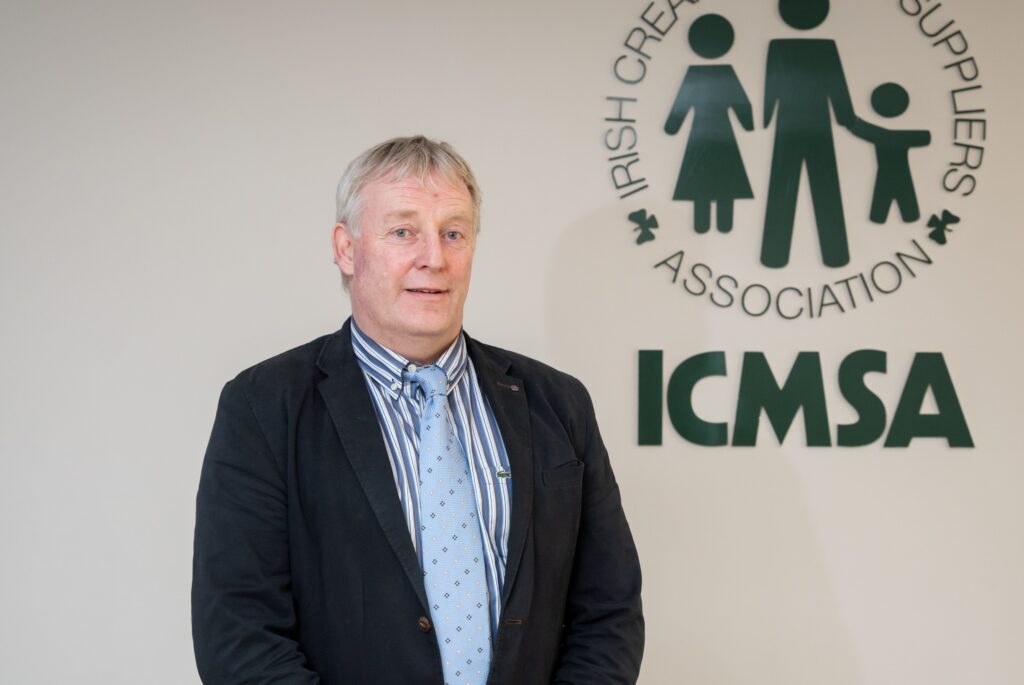
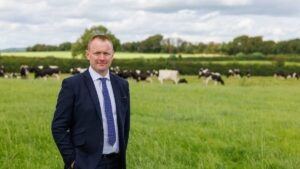
ICMSA Livestock chairperson Michael O Connell has expressed disappointment at the detection of the latest case of Bluetongue over the weekend while commending the fact that the infection was ‘picked up’.
Mr. O Connell has repeatedly stressed the importance of farmers being vigilant over the next few weeks for clinical signs of BTV as the temperatures remain ambient for midge replication. Noting that we are in an extremely challenging year in terms of both cashflow and weather, the Livestock Chairperson said that the case for vaccination is even more compelling and he urged herdowners who have not yet had their herds vaccinated to contact their vet and seek their advice on best practice at this stage in the year.
“We think that farmers should be insisting that all fallen animals are also tested for BTV”, he continued.
The ICMSA Chairperson said it was “inevitable” that we have seen our first BTV 3 positive case since this Spring as the virus has become rife in the UK. The number of positive cases has increased substantially in the UK and it is believed that vaccination uptake has not been as successful in the Uk as in Ireland.
“The somewhat passive narrative around spread of the virus in the UK and the ‘hit-and-miss’ application of vaccine has really come back to bite as the unseen consequences such as embryonic loss have begun to hit home financially for UK farmers”, noted Mr. O’Connell.
Although the uptake of usage of BTV 3 vaccination has been quite positive, Mr. O Connell urged the Department to look further into the dosage size of vaccine as the ‘one size fits all’ approach was not suitable and hampering effective vaccination.
“If we continue to only have access to 50 shot packs, we are going to see an awful lot of wastage as not every herd has 50 or 100 animals or exact multiples of 50. It’s inevitable that smaller breeding herds are not going to use the vaccine despite funding available in the 2026 Beef Welfare Scheme and the 2026 Sheep Welfare Scheme. The idea of farmers sharing vaccines is ultimately not a recommended scenario either due to handling constraints or cross contamination if cases of BTV occurs on farm. The viability of the vaccine overall should be a separate question from how the vaccine should be handled and distributed in a way that minimises cross-contamination and herd security”, he said.
Mr. O’Connell said that ICMSA have previously engaged with manufacturers of BTV 3 vaccine regarding the dosage sizes, the onset of immunity and the procedure following the first year’s vaccination programme.
“It was pointed out to us that the vaccine was produced as part of an emergency response to the initial outbreak of BTV in the Netherlands where they believed a 50-vaccine pack was adequate to represent the size of herds in the Netherlands. ICMSA is calling on the Department to engage with the BTV vaccine manufacturers regarding production of smaller pack sizes. This will give all farmers ample opportunity to access vaccine without wasting money on vaccine that is not used. We need DAFM to get after this much more as, frankly, their efforts to get farmers to vaccinate last Spring left a lot to desire and were half-hearted. We understand it is not possible to fence out or keep out midges but implementing other biosecurity measures is paramount and it is up to DAFM to encourage vaccination, not just ICMSA”, concluded Mr. O’Connell.
Ends 7 September 2026
Michael O’Connell, 086-8551015
Chairperson, ICMSA Livestock Committee
Or
Cathal MacCarthy, 087-6168758
ICMSA Press Office
Latest Headlines

- Sections
Contact Us
Telephone
061 314 677
+353 61 314 677