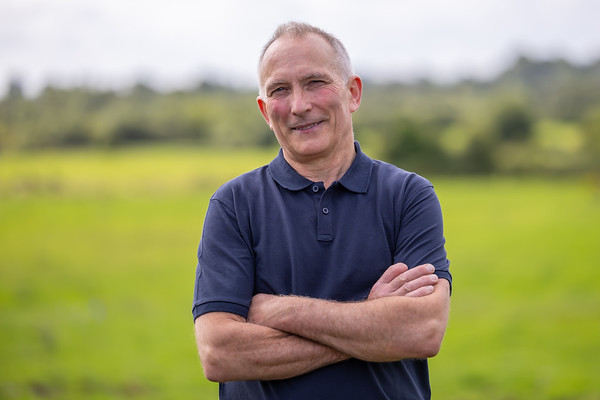
ICMSA say HSA Code of Practice on telescopic telehandlers “way over the top”
Speaking after a meeting yesterday with the HSA (Health and Safety Authority), the Chairperson of ICMSA’s Farm Business Committee, Pat O’Brien, said that the vast majority of farmers are completely unaware that training is now required under the Code – which came into operation last September- on the use on farms of telescopic telehandlers when lifting items such as bales and fertiliser bags or any ‘unit’ load. Mr. O’Brien described the requirements for training in specific work situations as “way over the top” and he called on the HSA to review the code’s training duration and cost and come back with something that recognises the ‘Real World’ in which farmers live.
“The first concern is that farmers are not even aware that the Code of Practice sets out a need for training and the fact that if the farmer or an employee hasn’t completed the required training, they are at the mercy of the judge in the event of a legal case arising”, said the ICMSA Chairperson.
Under this specific Code of Practice, farmers and employees using telescopic telehandlers to lift items such as fertiliser bags or bales must have the appropriate training. But using telehandlers for loose materials like pit silage or gravel is permitted without the same requirement for training. Tractors are exempt as they are rigid and not telescopic. There are estimated to be around 4,000 telehandlers on farms in Ireland, and Mr. O’Brien said farmers remained uncertain about what the differing requirements in differing circumstances.
“The second big issue is the length and cost of the training with the proposed course taking up to five days with three days at a minimum,” he said.
“The course itself could cost €1,000, and when you include wages and PRSI, you could be paying €2,000 for an employee to complete it. That is ridiculous; it will do nothing for farm safety and it’s going to cost €4 million when you take 4,000 telehandlers across Irish farms and assuming only one person gets trained”, he continued.
ICMSA made it clear to the HSA that a more practical collaborative approach is needed that would include ‘on farm’ demonstration days that would allow farmers to avoid costly and time-consuming courses that must be considered doubtful in terms of practical improvements to farm safety.
“If we really want to make farms safer, then we should be focussed on providing training that is both time and cost-efficient. People won’t do it otherwise, that’s the reality. The length of the training acts as a deterrent for participation and there needs to be allowances or ‘credits’ made for experienced operators too. Everybody wants safer farms but the approach being adopted on telehandlers is ridiculous and so ‘over the top’ that it puts people off engaging at all. The HSA has to start living in the real world where farmers are and must come back with a more practical and commonsense option”, concluded Mr. O’Brien.
Ends 2 April 2026
Pat O’Brien, 087-4904424
Chairperson, ICMSA Farm Business Committee
Or
Cathal MacCarthy, 087-6168758
ICMSA Press Office
Latest Headlines


- Sections
Contact Us
Telephone
061 314 677
+353 61 314 677