Govt urged to “get ahead of looming fodder crisis” – ICMSA say low stocked farmers could provide critical additional fodder if permitted to use more fertiliser
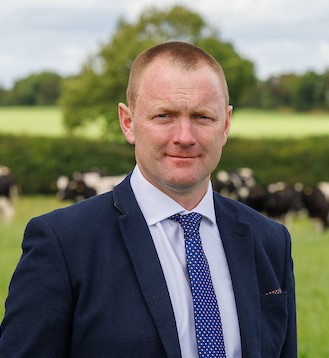
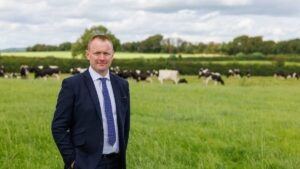
The President of ICMSA, Denis Drennan, has called on the Government to accept that a fodder crisis is looming and to ‘get ahead’ of it. Mr Drennan said that the competent and practical fashion with which the fodder shortage of 2018 was dealt with should provide a very useful template and example.
“It’s perfectly obvious that there’s going to be severe pressure on fodder and winter silage and while we understand the need for a ‘fodder inventory’ calculated by Teagasc, the obvious point to make is that it’s very difficult to measure the stock of something that’s actually falling as you try to measure it! So, getting the fodder inventory shouldn’t delay for even one day the implementation of measures that it’s obvious are going to be required. We think that that the 2018 example provides a very useful and proven sequence to follow in terms of actively incentivising tillage growers to grow both short rotation grasses, and specific catch crops like stubble turnips, fodder rape and westerwold grass. In 2018, then Minister Creed noted the suitability and availability of land for growing catch crops that was within GLAS and which could be utilised – we’d expect Minister Heydon to look at the same option”, said Mr Drennan.
“At the same time as we respond effectively, we have to keep an eye on water quality and one option that does not have a water quality impact and which should be considered is allowing lowly stocked farmers to spread more fertiliser when the rain comes and it is appropriate to do so. That will provide fodder for sale in the coming months and next Spring. An increased allowance is already in place for farmers with no stock and perhaps this allowance should be amended for farmers with low stock numbers to encourage additional fodder production without compromising water quality”, he said.
“These farmers are in a position to produce fodder but the fertiliser limits imposed on them does not take account of fodder sales and the Department should ‘up’ this limit to allow, specifically, for fodder sales, safe in the knowledge that the higher limit will have no impact on water quality.”
The ICMSA President said he thought it “almost certain” that state subvention of the importation of haylage, alfalfa and other types of imported forage to be distributed through Co-ops and registered importers would be required – as per 2018. The question was what was available and where?
“We all have to be realistic: based on the summer drought, it’s almost certain that the fodder shortage will be worse than that experienced in 2018 and what ICMSA would be saying is that the measures introduced – and which worked reasonably well then – must be the minimum benchmark in terms of Government response in the current circumstances”, he said.
Mr Drennan concluded by saying that though the circumstances obviously warranted a specific response to what could be a catastrophic shortage of fodder this coming winter, he felt that farmers were “tired” of having a whole succession or sequence of challenges and problems treated in this ‘standalone’ fashion.
“Whether it’s a fertiliser crisis, or fuel crisis, or fodder crisis, or succession crisis, or low prices crisis, they are actually all ‘of a piece’ and go to an underlying problem that has farmers permanently ‘under a financial hammer’ where their costs and outgoings are either equal to, or – as is the case this year – greater than their earnings. These ‘crises’ all come under a different heading, but all boil back down to the fact that farmers incomes are both inadequate and precarious and while it’s notable to see the Government address one aspect of that: it’s a much more fundamental problem that’s going to require a much more fundamental solution”.
Ends 14 August 2026
Denis Drennan,
President, ICMSA
Latest Headlines

- Sections
Contact Us
Telephone
061 314 677
+353 61 314 677